Sensory Map
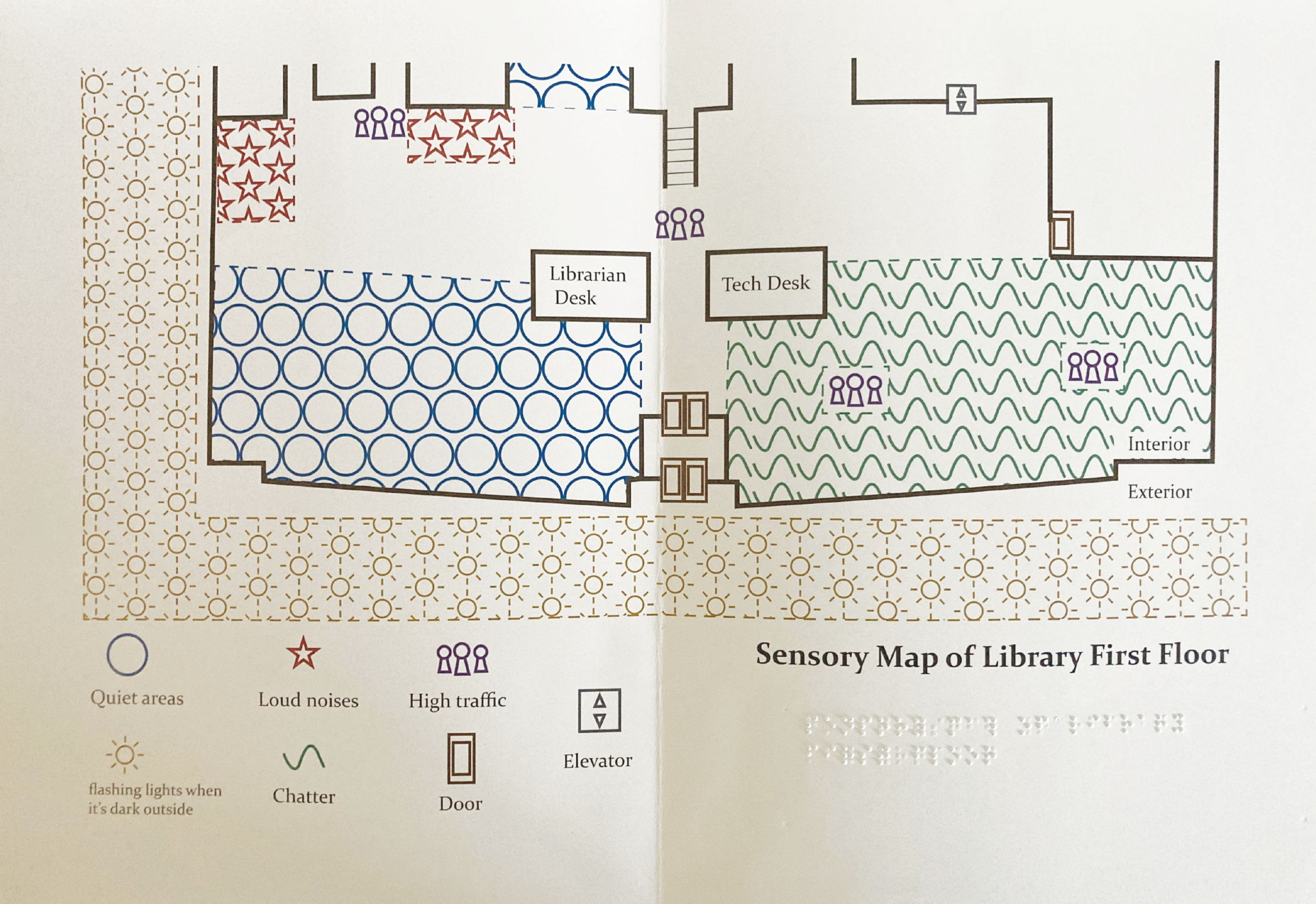
A sensory map is used to map out what a person might sense in certain areas. The map could be used to warn viewers that the area is often loud or crowded. This tool can help people know what to expect sensory-wise and prepare themselves.
This sensory map is made for the Roger Williams University library. This design was a part of a project where accessibility was the most essential element. As such the visuals are different from what I would usually do.
I used Illustrator and Indesign for this map. Illustrator was used for the map and pattern elements, while Indesign was used for the text.
Before this project, I didn’t know much about how to make a design accessible to everyone. Some skills I learned are checking color contrast, braille, and alternatives for color coding.
Sensory Map process
The project overview was that we had to choose a room or building and make a sensory map and key for that selected area. Also, heavy emphasis was put on accessibility above aesthetics.
For this project, making the map accessible meant anyone could read it. Therefore, we had to keep in mind possible disabilities like blindness and change the design accordingly.
The area I mapped for this project was my university’s library’s main room. The reason I chose this area is because I am familiar with the people and sounds. To help aid my accuracy, I used the floor plans for that room to guide my illustration.
I used Illustrator to make the patterns and icons that signified different stimuli.
After I printed out the map, I added braille next to the text. If I had the resources, it would have been fun to emboss the illustrations to add more accessibility to the visually impaired.